 Castelnuovo Berardenga
 Fèlsina
Chianti Classico DOCG · Toscana IGT

Chianti Classico
Chianti’s city of Sangiovese: warm southern slopes where the grape ripens fullest, just outside Siena.
Castelnuovo Berardenga is the southern gateway to Chianti Classico, about 14 kilometres east of Siena, where the wooded hills give way to the open clays of the Crete Senesi. Its name joins the “new castle” the Sienese fortified here after the battle of Montaperti with Berardo, a tenth-century nobleman of Frankish descent whose lands gave the district its name, the Berardenga. Only part of the comune lies inside the Chianti Classico zone, along its southern edge — but what lies inside is formidable.
We like to call it Chianti’s city of Sangiovese. These are the warmest, most south-facing slopes of the appellation, and here the grape ripens fullest: the wines are dark-fruited, firmly tannic and intense. Two UGAs cover the area — Castelnuovo Berardenga, with some 760 hectares of vines on alberese, tufo and marine clays, and Vagliagli, with about 1,080 hectares on sandstone to the north-west — which together place it, with Greve, among the two largest vineyard comuni of the zone. Fèlsina built its reputation on pure Sangiovese in Rancia and Fontalloro; at San Felice, the Vitiarium vineyard preserves more than two hundred old and nearly forgotten grape varieties; Castell’in Villa is another of the estates that define the area.
The villages repay the detours: San Gusmè, a round walled hamlet entered through the Porta Senese, with its irreverent statue of Luca Cava; Villa a Sesta; Vagliagli; Pievasciata, home of the Chianti Sculpture Park in the oak woods; Pianella; and part of Quercegrossa. In Castelnuovo itself, the park of Villa Chigi Saracini and the Museo del Paesaggio, devoted to how this landscape was made, are worth an hour each.
Castelnuovo belongs to Cittaslow, the network of slow towns, which suits its pace. It is also, perhaps unexpectedly, the most decorated table in Chianti: four restaurants in the comune hold a MICHELIN star — Poggio Rosso, Contrada, Il Visibilio and L’Asinello — more than any other comune of the zone.
UGA
760 ha of vineyard
The warm southern edge of the zone, between about 275 and 450 metres: alberese in the north, tufo in the middle, marine clays in the south. Dark fruit, plenty of tannin and real intensity — the most powerful wines of the denomination.
UGA
1,080 ha of vineyard
The northern part of the Castelnuovo Berardenga comune, between about 300 and 450 metres, largely on sandstone, with the largest average estate size of any UGA. Generous, rounded wines, more austere from the higher sites.
Castelnuovo Berardenga Chianti Classico DOCG · Toscana IGT
 San Felice · Castelnuovo Berardenga
 Chianti Classico DOCG · Toscana IGT
 Castelnuovo Berardenga
 Chianti Classico DOCG · Toscana IGT
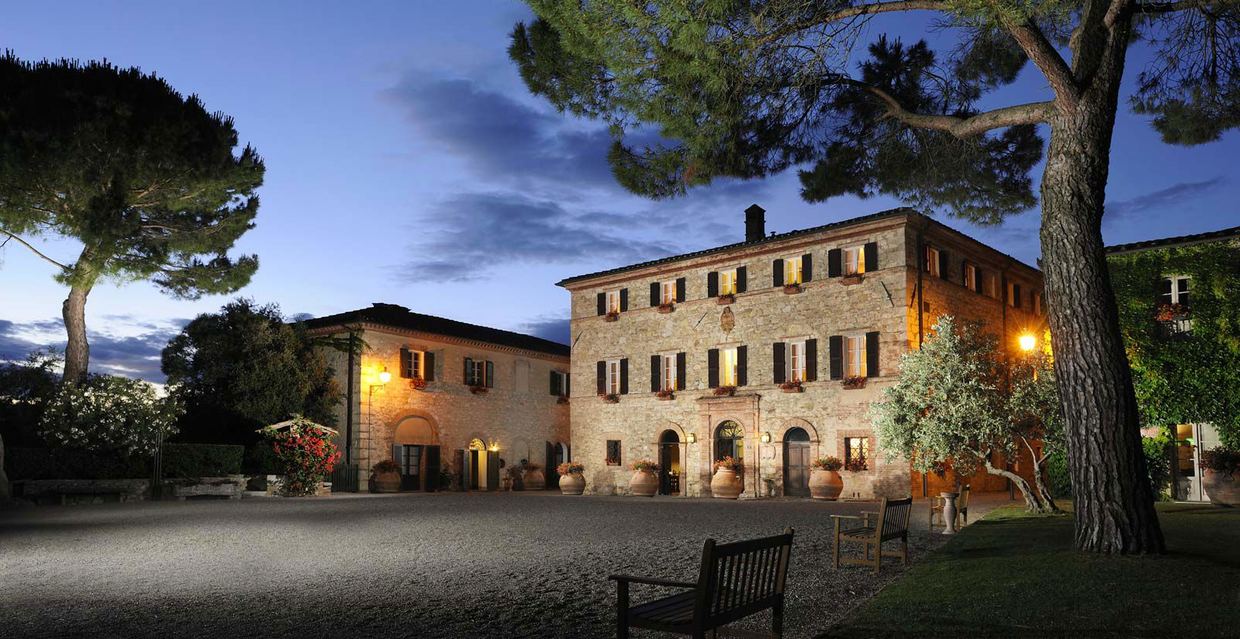
Relais & Châteaux · Wine Resort
An entire medieval hamlet — church, olive press, and all — converted into one of Tuscany’s finest wine hotels, a member of Relais & Châteaux since 1992 and owned by Allianz. More than 60 rooms and suites across its historic buildings, two pools, a spa, and two MICHELIN Keys. Poggio Rosso holds one MICHELIN star and a Green Star, with chef Stelios Sakalis in the kitchen since July 2025 as part of Enrico Bartolini’s group; Osteria Il Grigio is the more relaxed alternative. The estate also produces well-regarded Chianti Classico under the Agricola San Felice label.
borgosanfelice.com · +39 0577 3964 · Read more →
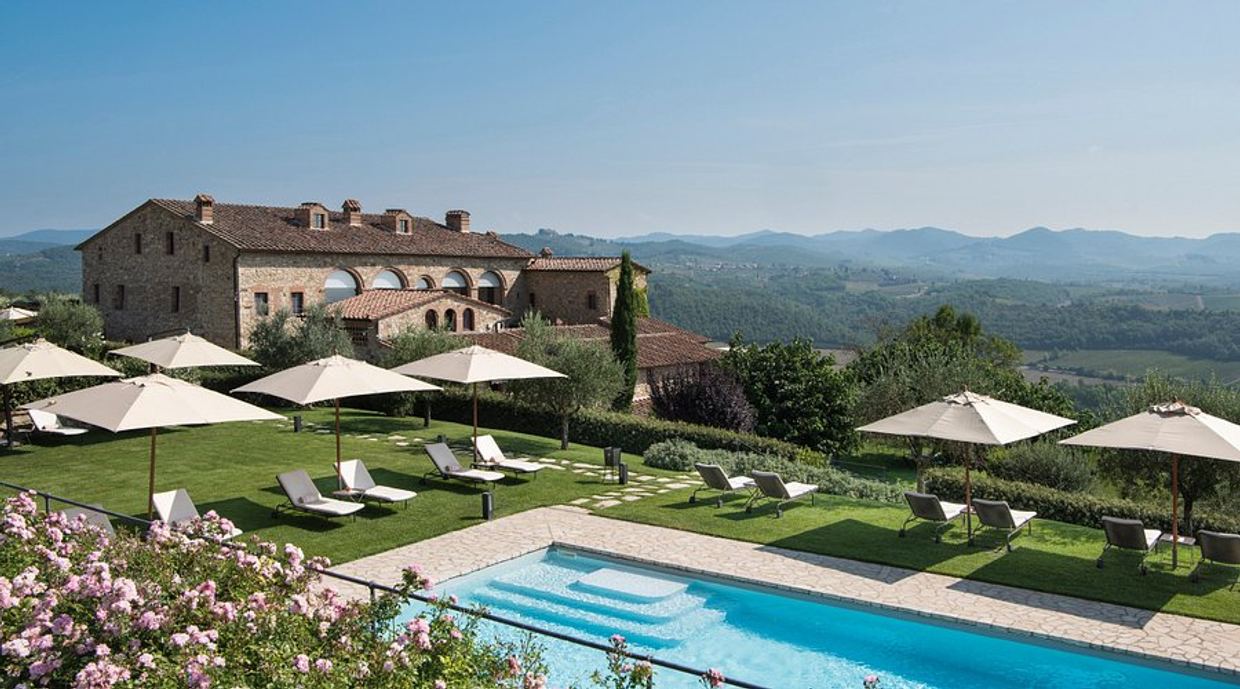
Rural Hotel · Spa
A beautifully positioned rural hotel at Pianella, on the Sienese side of the zone, with an indoor heated pool, an outdoor pool, a full spa, and panoramic views across the vines and cypress hills of the Chianti Classico. The restaurant sources ingredients from the estate and from neighbouring farms. Ideal for those who want comfort and stillness in equal measure.
lefontanelle.com · +39 0577 740194 · Read more →
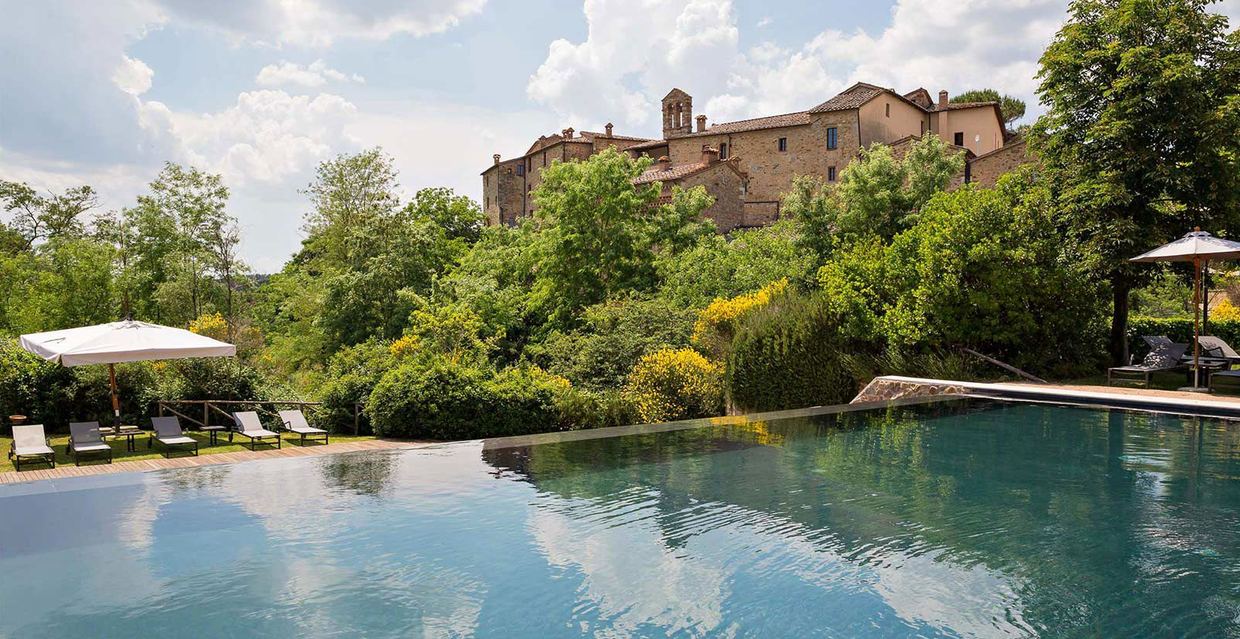
Medieval castle hamlet · Spa Monasterii · MICHELIN-starred Contrada
Castel Monastero is first recorded in 1044, under the name of Sarna, and from 1050 is called Monastero after the nearby Berardenga abbey. Siena and Florence fought over it, and the Sienese Chigi Saracini family later made it their country house for hunting and the grape harvest. Restored as a resort, the castle and its hamlet now hold 68 rooms, suites and signature suites around a small piazza, plus Villa Lavanda for those who want a house of their own.
castelmonastero.com · +39 0577 570570 · Read more →
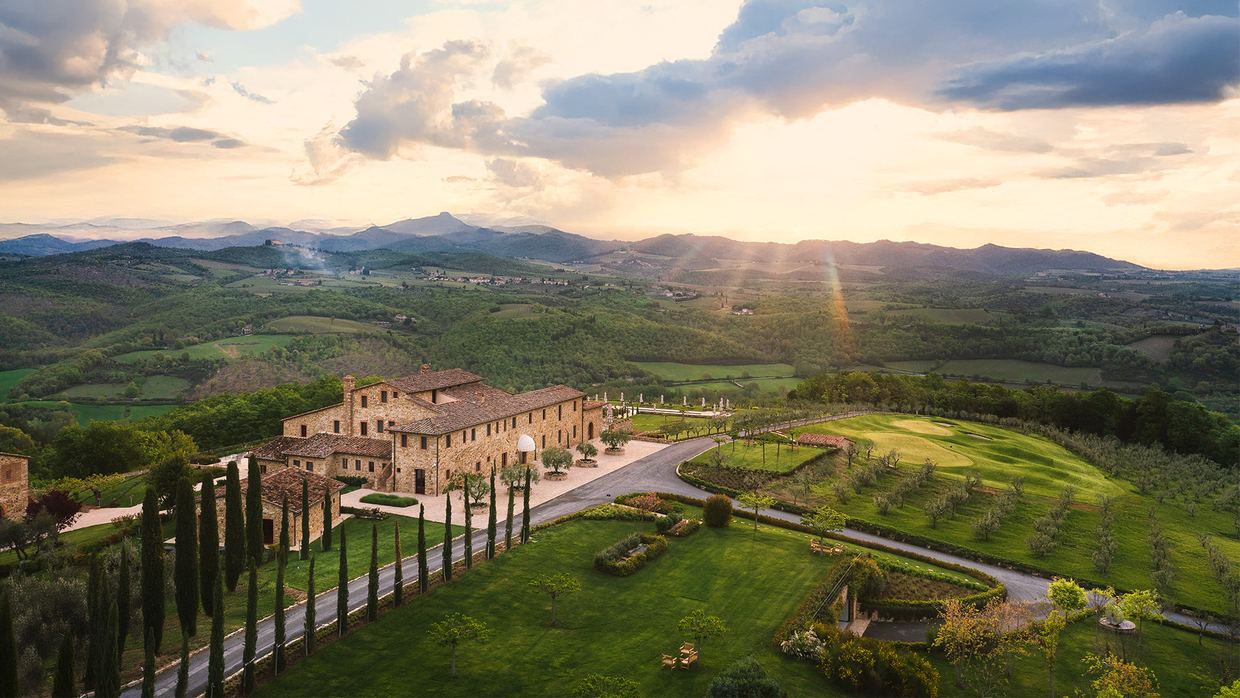
Adults only · 15 rooms · MICHELIN-starred Il Visibìlio
The Club House opened in 2022 in a restored farmhouse near Pievasciata, at the end of a dirt road in the hills north of Siena. It is the quieter sibling of Hotel Le Fontanelle and the Vallepicciola winery, all three tied to the Bolfo family under the Fontanelle Estate name. Fifteen rooms and suites, adults only (teenagers from 14 are accepted), are done in classic Tuscan style; some suites have a private garden or a terrace over the valley.
fontanellestate.com · Read more →

Medieval hamlet · Five-star relais · Views of Siena
Borgo Scopeto began as a fortified outpost of Siena; its name comes from the heather once cut here for brooms. Florence took it and left a stone Marzocco lion, still in the main garden. From the fourteenth to the nineteenth century the Sienese Sozzini family turned it into a castle and farming village, and in the 1990s Elisabetta Gnudi Angelini bought and restored it, with the Borgo Scopeto winery a few kilometres away.
borgoscopetorelais.it · +39 0577 320001 · Read more →

One MICHELIN star · On the piazza of a medieval castle
1 MICHELIN StarContrada sits on the little piazza at the heart of Castel Monastero, the medieval castle hamlet near Monastero d’Ombrone. Chef Davide Canella holds a MICHELIN star for refined, elegant cooking with a seasonal menu built on the surrounding land. There is a tasting menu and an à la carte, both leaning towards meat with some well-chosen fish; the inspectors mention prawns with panzanella and duck breast with hosomaki.

One MICHELIN star · Blind tasting menu
1 MICHELIN StarAt the end of a dirt road near Pievasciata, the village of contemporary art in the hills above Siena, Il Visibìlio is the MICHELIN-starred restaurant of The Club House. There is no à la carte and no printed menu in advance: a single blind tasting menu moves between land and sea, makes generous use of vegetables and plays on contrasts of flavour and temperature. The inspectors remember the pigeon with rhubarb and absinthe sauces.

One MICHELIN star · In a former stable
1 MICHELIN StarVilla a Sesta is a small hamlet south of Castelnuovo Berardenga, and L’Asinello has been here since 2011, in a carefully converted old stable. It is run by two people: Senio Venturi in the kitchen and Elisa in the dining room. Senio’s cooking starts from the Tuscan tradition and local farmers, then goes its own way with bold flavours and a contemporary touch; it holds a MICHELIN star.

One MICHELIN star · MICHELIN Green Star · Relais & Châteaux
1 MICHELIN Star· Green StarPoggio Rosso is the gastronomic restaurant of Borgo San Felice, the Relais & Châteaux hamlet among the San Felice vineyards. Since July 2025 the kitchen has been led by Stelios Sakalis, part of Enrico Bartolini’s group, who brings experience from leading European kitchens to Tuscan ingredients; his cooking is technical and balanced, with a Mediterranean lightness. It holds one MICHELIN star and the MICHELIN Green Star for sustainable gastronomy.
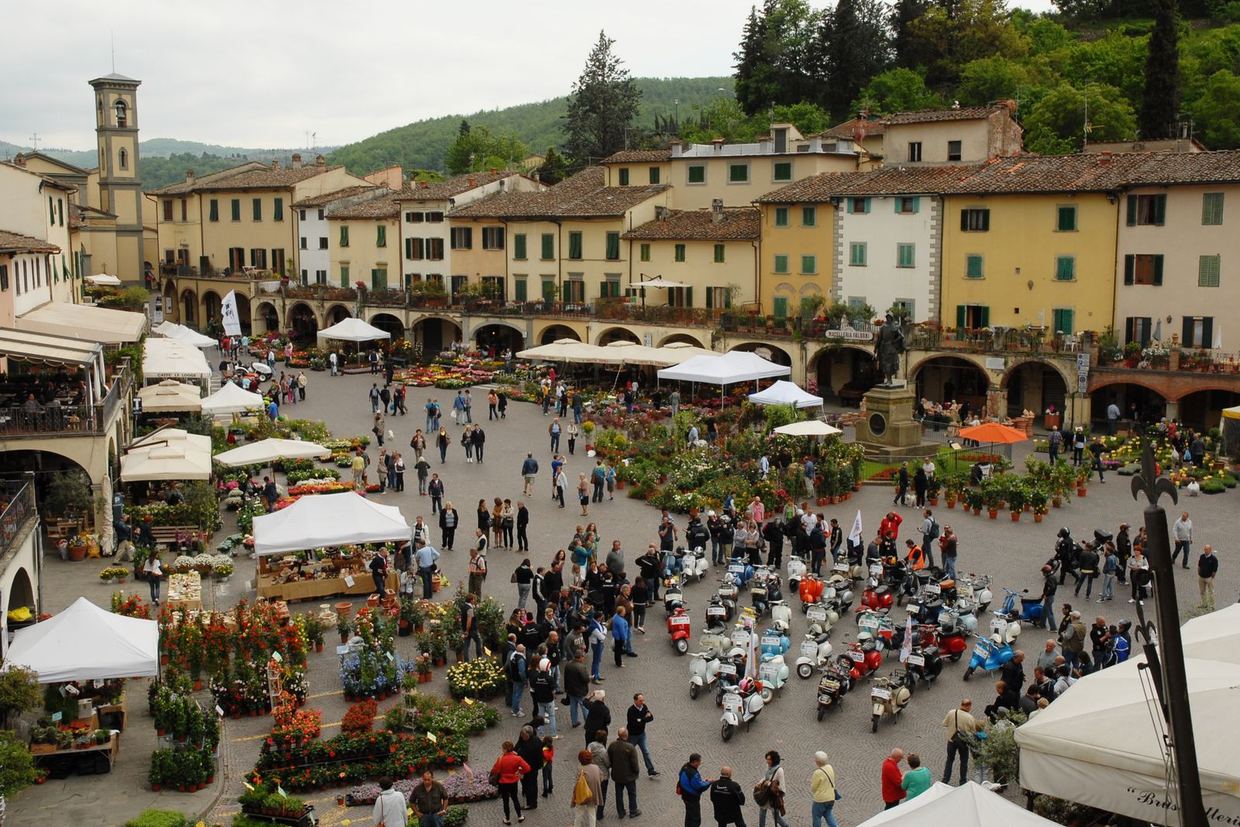
The market town of the Florentine Chianti: an arcaded piazza, a Saturday market and four UGAs.
9 places →
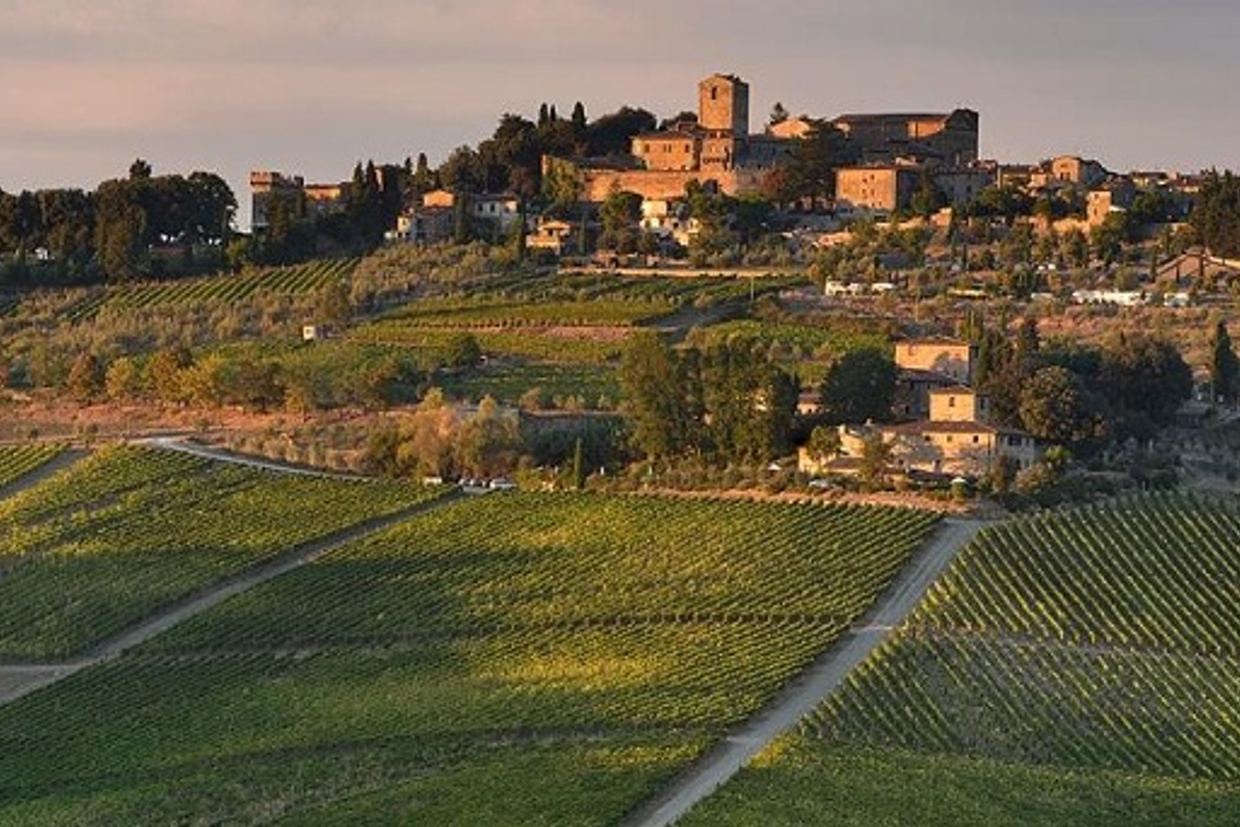
Greve’s hilltop village above the Conca d’Oro, where organic Sangiovese and Dario Cecchini’s table meet.
5 places →
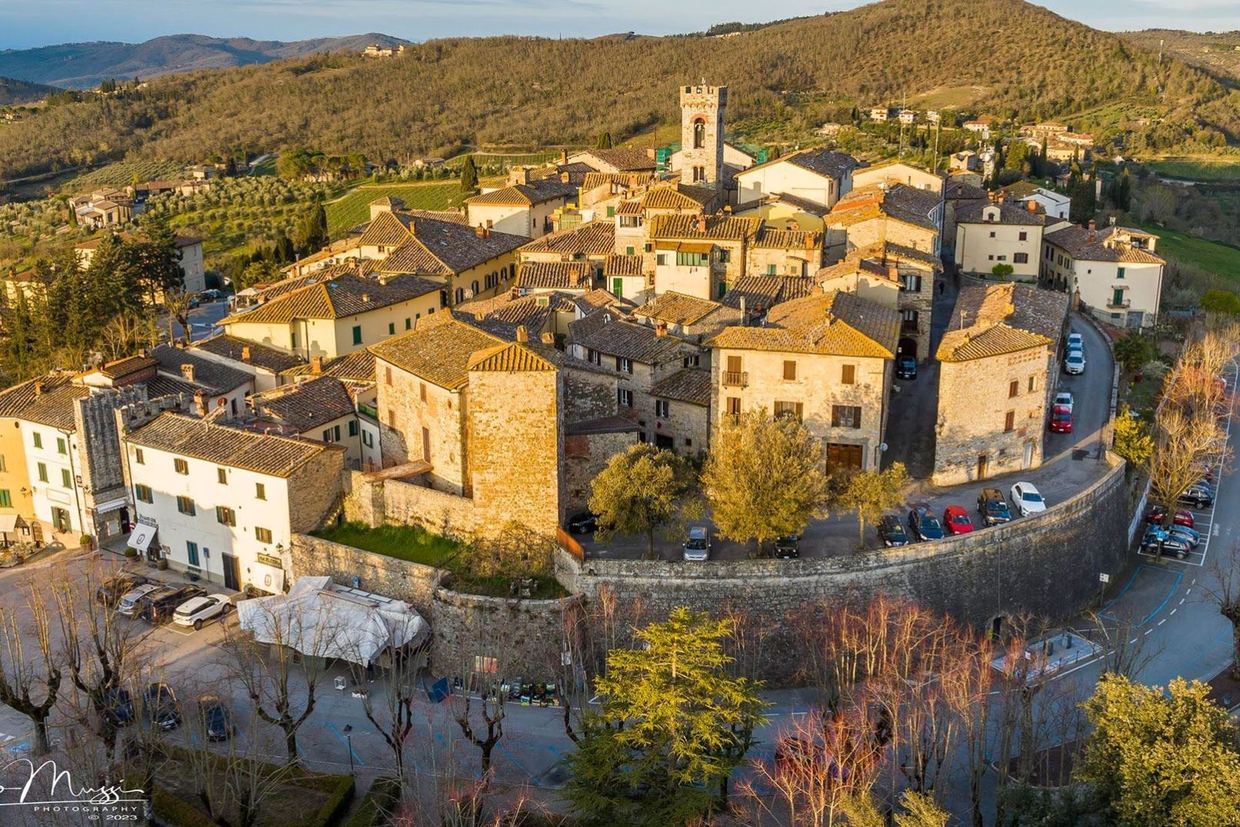
The walled seat of the medieval Lega del Chianti: high, cool and elegant in the glass.
4 places →
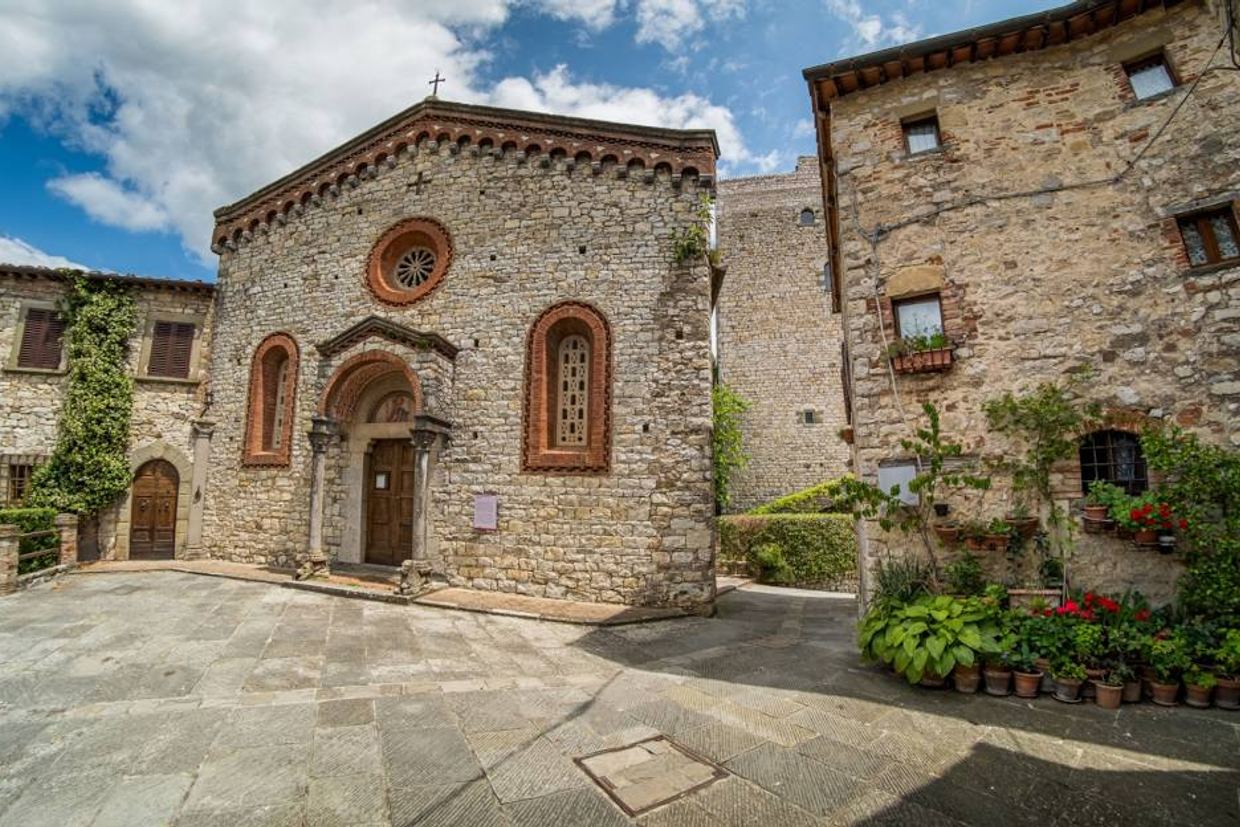
Castle country: Brolio, Meleto, Vertine and the abbey of Coltibuono in the wooded south-east.
10 places →
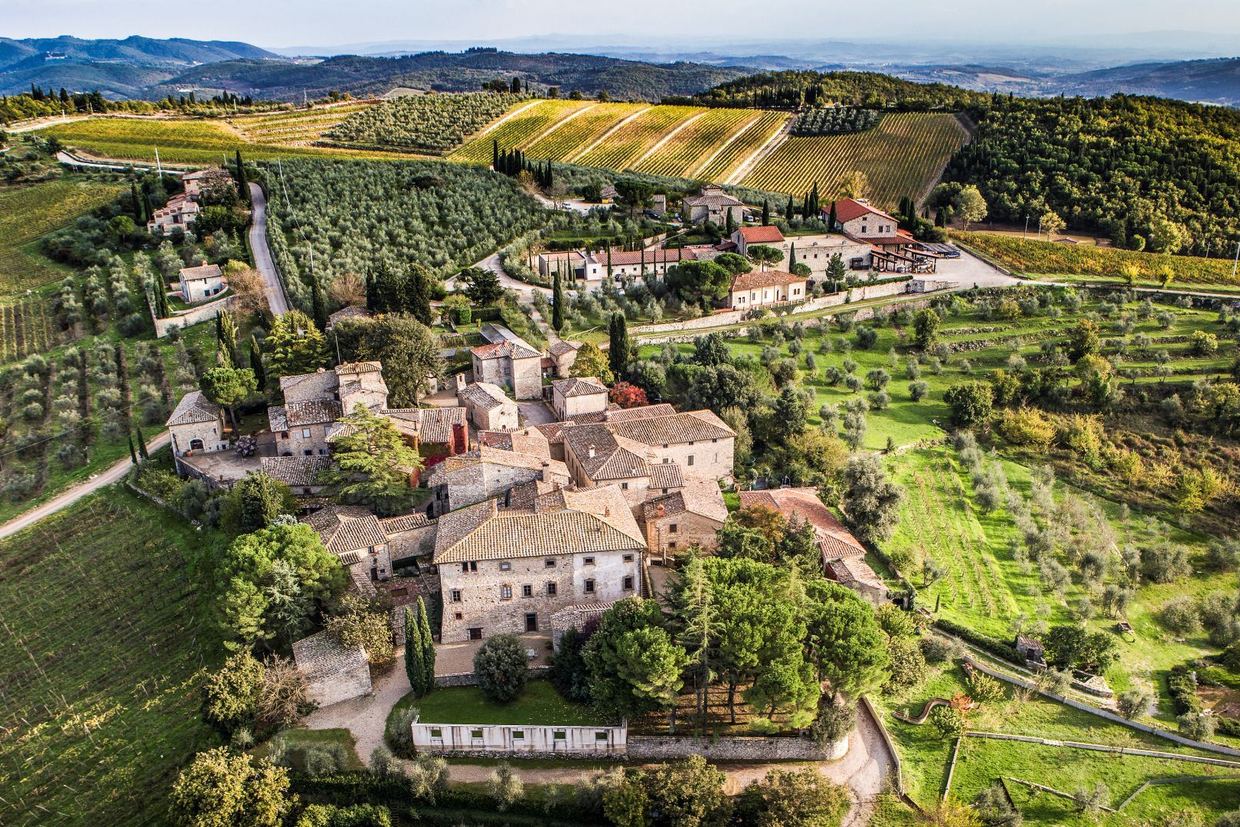
An Etruscan hill town on the Florence–Siena ridge, with the largest vineyard area of any UGA.
3 places →
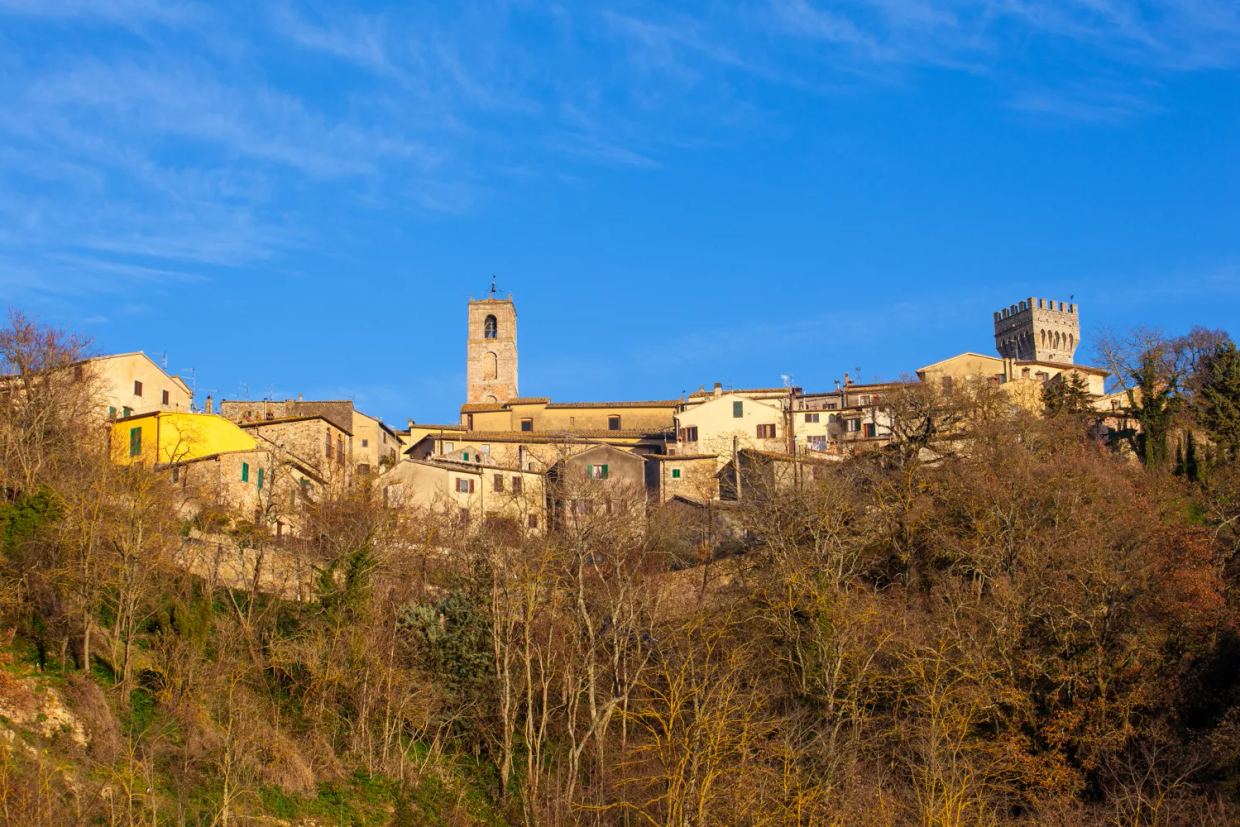
The northern gate from Florence: walls and towers, Machiavelli’s exile and Antinori’s cellar in the hill.
1 places →
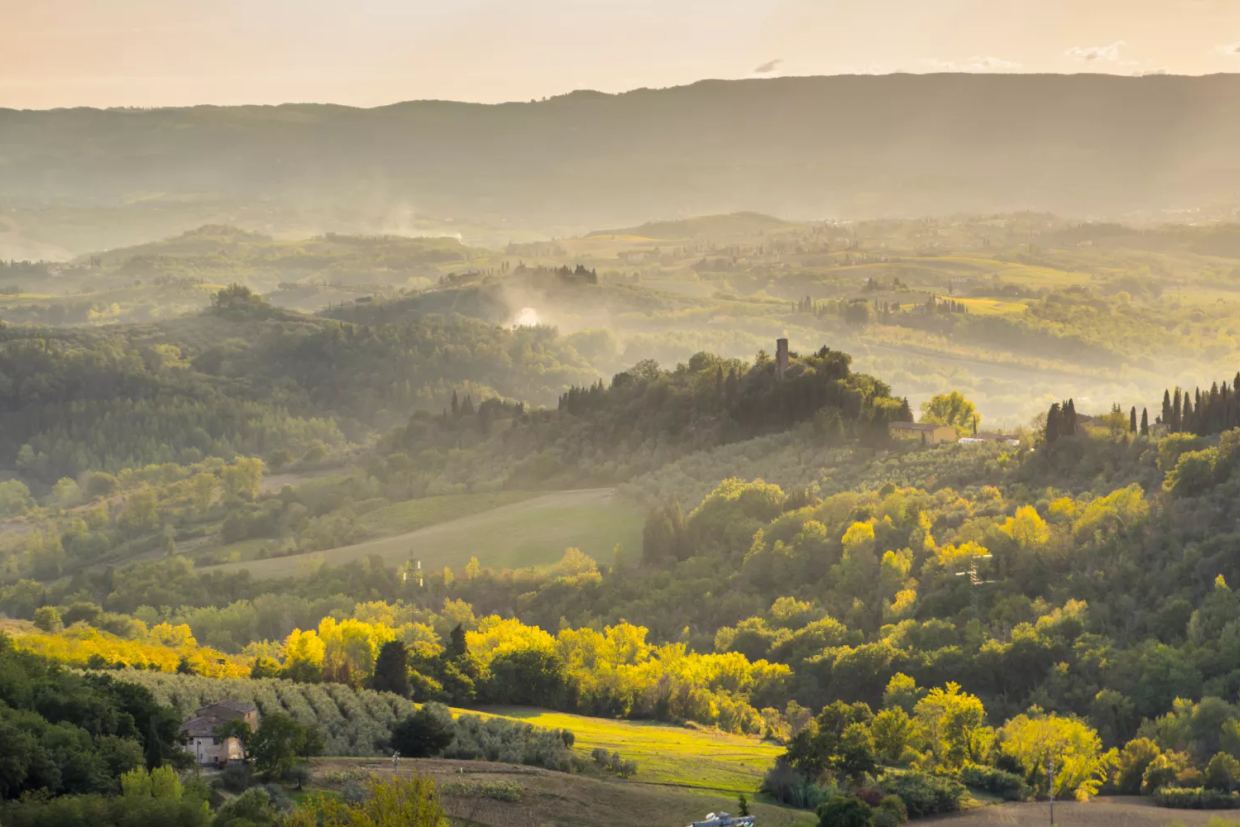
The western comune of abbeys and walled borghi: Badia a Passignano, San Donato in Poggio, Castello del Nero.
5 places →